Cruise eSIM Guides
What Is an eSIM? Everything You Need to Know in 2026
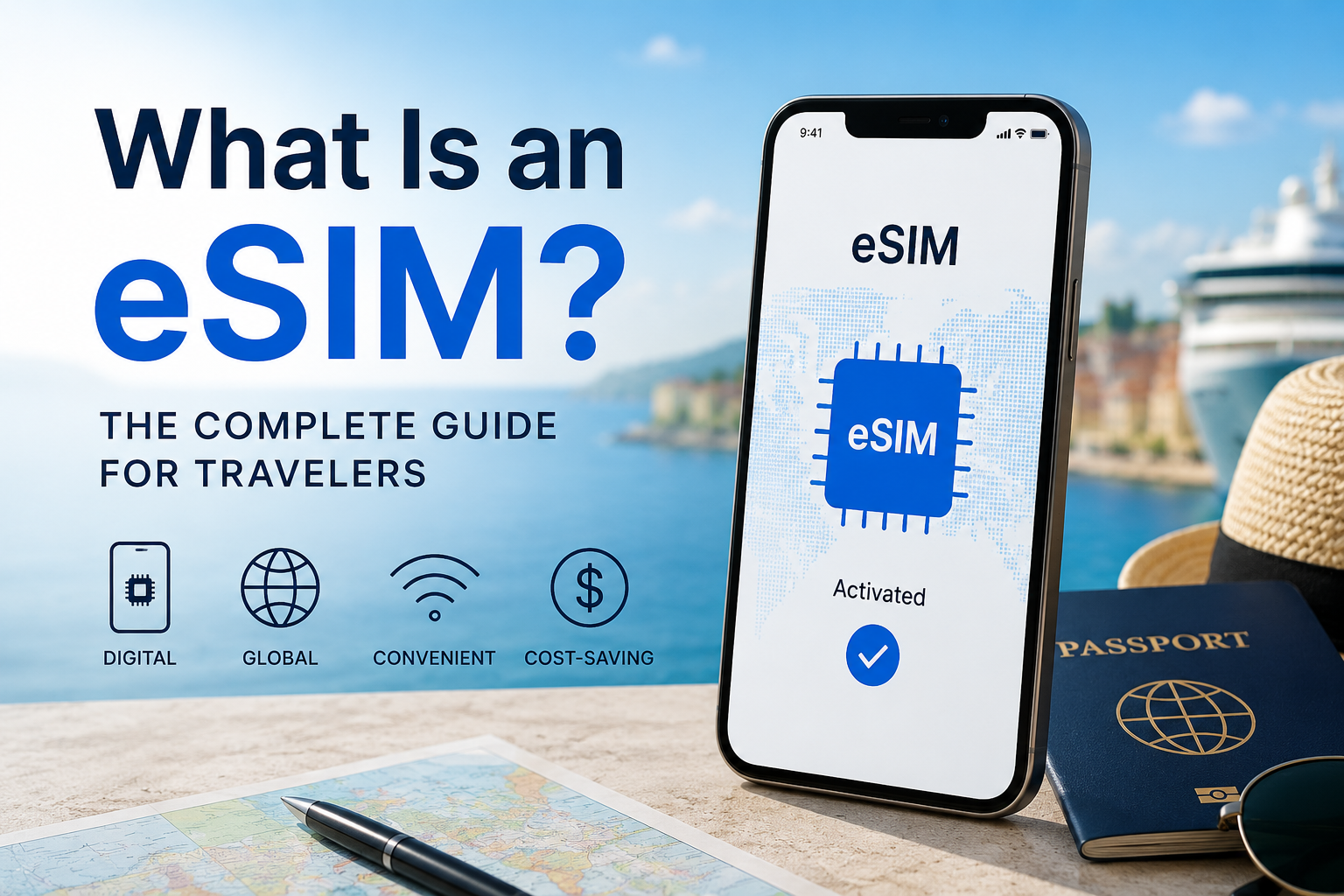
If you've been researching ways to stay connected while traveling, you've likely come across eSIM. But what is an eSIM?
An eSIM (embedded SIM) is a digital SIM built into your device, allowing you to download and activate mobile plans without swapping physical cards.
As more devices support eSIMs, they’ve become a popular choice for travelers. They make it easy to stay connected abroad without high roaming fees or buying local SIM cards.
In this guide, you'll learn how eSIM works and whether it’s the right option for your next trip.
What is an eSIM?
An eSIM (embedded SIM) is a digital version of a physical SIM card.
It performs the same function as a traditional plastic SIM card.
The difference is that you don't need to insert or replace a physical SIM. Instead, you simply purchase a mobile plan from a carrier or eSIM provider and download it to your device. Once activated, your eSIM works just like a regular SIM, allowing you to use internet, make calls and send messages (if supported by your plan). Many travel eSIMs are for mobile data only, meaning they don't include a phone number or support calls and SMS.
eSIM vs Physical SIM
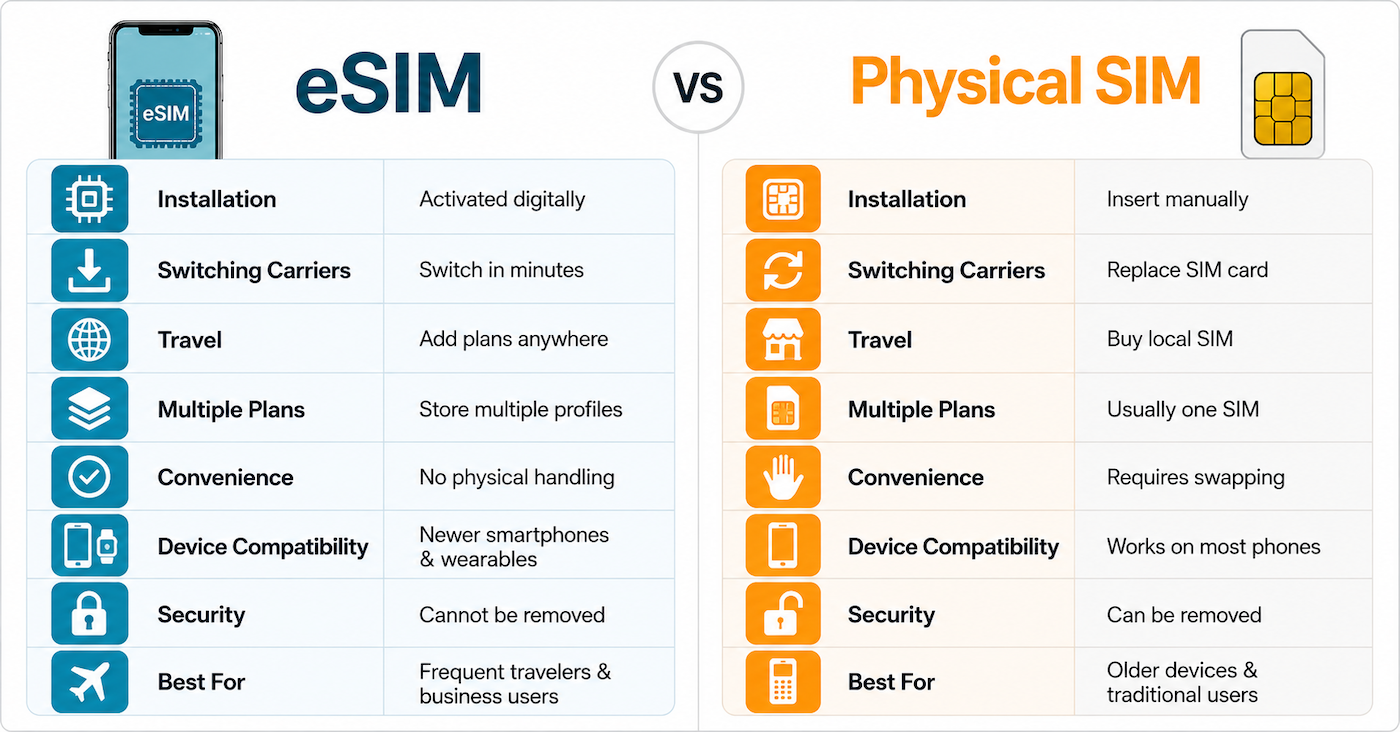
Both eSIMs and physical SIM cards connect your device to a mobile network, but eSIMs offer greater flexibility and convenience. An eSIM is activated digitally, making it easy to switch carriers, add travel plans, and store multiple profiles without handling a physical card.
Physical SIMs remain widely compatible and are still the better option for older devices, but for most modern smartphones, an eSIM is the simpler and more travel-friendly choice.
Benefits of eSIM vs Drawbacks
Some of the biggest advantages of using an eSIM include:
No physical SIM card required. Activate your mobile plan digitally without inserting or replacing a SIM card.
Quick and easy setup. Most eSIMs can be installed and activated in just a few minutes.
Lower roaming costs. Purchase local or regional data plans instead of paying expensive international roaming fees.
Store multiple mobile plans. Many devices let you save several eSIM profiles and switch between them when needed.
Keep your existing phone number. Use your primary SIM for calls and texts while using an eSIM for mobile data.
Ideal for travel. Stay connected in different countries without buying local SIM cards.
Easy to switch carriers. Change mobile providers by downloading a new eSIM profile instead of replacing a SIM card.
More secure. An eSIM is built into your device, making it harder to remove if your phone is lost or stolen.
Which Devices Support eSIM?
Most modern smartphones, tablets, and smartwatches support eSIM technology.
On Apple devices, eSIM is available on newer iPhones, while many recent Android phones from manufacturers such as Samsung, Google, Motorola, and Xiaomi also include eSIM support. Many cellular iPads and smartwatches are compatible as well. If you're unsure whether your device supports eSIM, the easiest option is to check your phone's settings. You can also visit the manufacturer's website, review your device's specifications, or use your mobile carrier's compatibility checker, if one is available.
Always confirm eSIM compatibility before purchasing an eSIM.
Read more: Which Phones Support eSIM for Cruise
How Does an eSIM Work?
Downloading an eSIM
First, you need to install an eSIM on your device.
The process is quick and straightforward. Simply purchase an eSIM plan from a mobile carrier or eSIM provider, and you'll receive a QR code or activation details by email or through the provider's app. Scan the QR code or follow the setup instructions to download the eSIM profile to your phone, tablet, or smartwatch. In most cases, the entire installation takes just a few minutes.
Connecting to a Mobile Network
Once your eSIM is installed and activated, your device connects to a mobile network in the same way it would with a physical SIM card. You can use the internet, make calls, and send texts if your plan includes those services. Most compatible devices can also store multiple eSIM profiles, allowing you to switch between different mobile plans without changing SIM cards. This is especially useful for travelers who regularly visit different countries.
Do I Need Internet to Install an eSIM?
Yes. You need an internet connection to download and activate an eSIM profile on your device.
This can be through Wi-Fi or an existing mobile data connection. Once the eSIM has been installed and activated, you no longer need internet for the setup process. It will connect to the mobile network covered by your plan. For this reason, it's a good idea to install your eSIM before leaving home or while you still have access to a reliable Wi-Fi network. This ensures your eSIM is ready to use as soon as you arrive at your destination.
Does an eSIM Change My Phone Number?
No. Installing an eSIM does not automatically change your phone number.
Many travel eSIMs are data-only, meaning they don't include a phone number. In this case, you keep your existing phone number on your physical SIM or primary eSIM while using the travel eSIM for mobile data.
Can You Use an eSIM and a Physical SIM Together?
Yes. Many modern smartphones support Dual SIM functionality, allowing you to use an eSIM and a physical SIM card at the same time. This lets you keep your regular phone number active while using an eSIM for mobile data.
For example, you might use your physical SIM for calls and text messages from your home carrier while using an eSIM for affordable data during an international trip. You can also keep separate work and personal phone numbers on the same device, eliminating the need to carry two phones. This flexibility is one of the biggest advantages of eSIM technology, especially for frequent travelers and business users.
Read more: How to Use Your Regular SIM and Cruise eSIM Together
Is an eSIM Better Than Roaming?
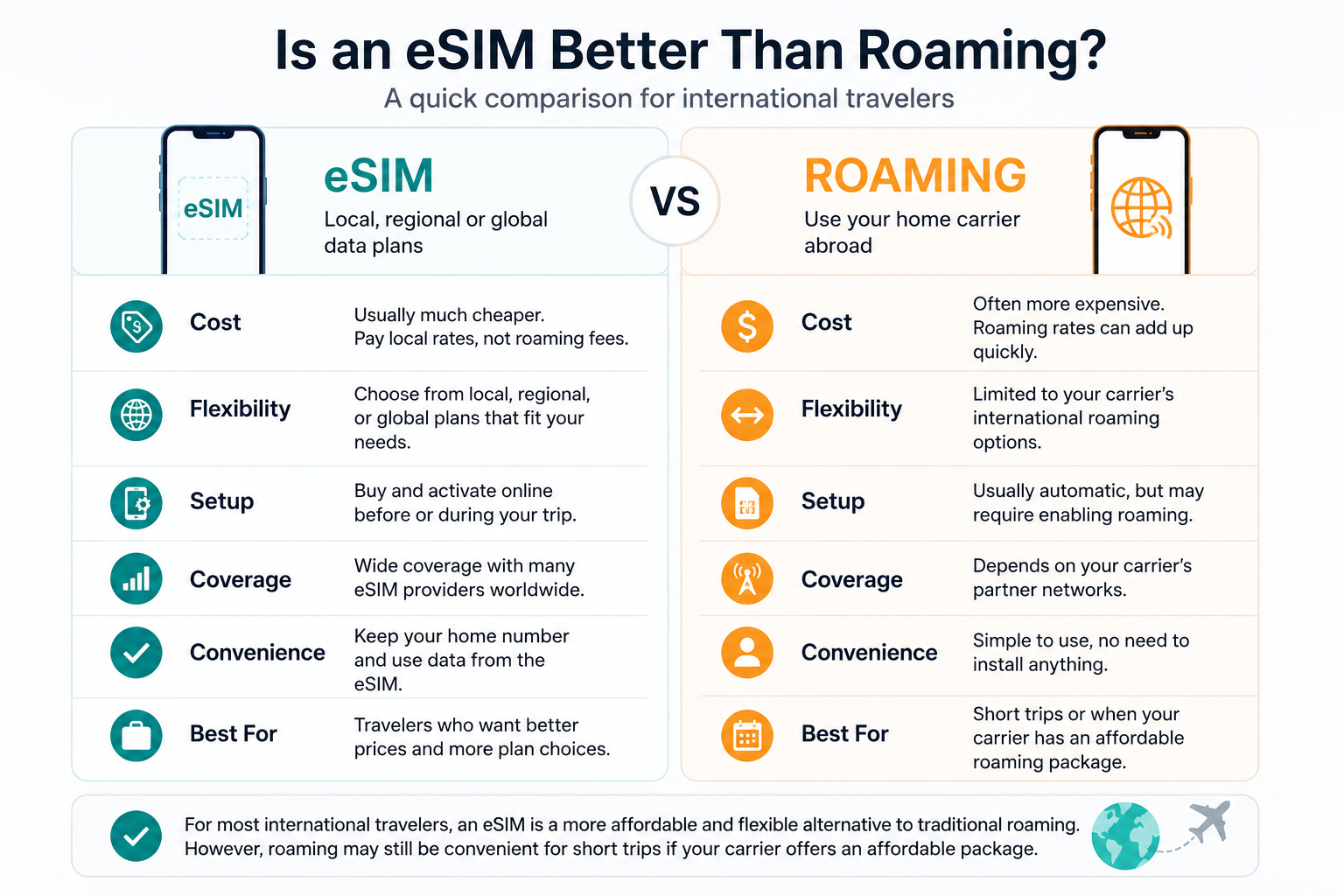
For most international travelers, an eSIM is a more affordable and flexible alternative to traditional roaming.
Instead of paying your home carrier's roaming rates, you can purchase a local, regional, or global eSIM plan before or during your trip. However, roaming may still be convenient for short trips if your carrier offers an affordable international package.
Read more: Cruise eSIM vs International Roaming
eSIM for Cruises
Can you use eSIM for cruises?
Yes, you can use an eSIM on a cruise, but the type of eSIM you need depends on where you want internet access.
A regular travel eSIM works when your cruise ship is in port, connecting to local mobile networks in the countries you visit. Once the ship sails away from land, it will typically lose service because there are no nearby cellular towers.
If you want mobile data while the ship is at sea, you'll need a cruise (maritime) eSIM. These plans connect to the ship's onboard cellular network, which uses satellite internet to provide connectivity. Keep in mind that maritime eSIMs are only supported on certain cruise ships, and your device must be compatible.
Read more: How to Buy an eSIM for Cruise (2026)